German economy entered recessio
Introduction: The German economy faced a setback in the first quarter of 2023 as it contracted compared to the previous three months, officially entering a recession. Data from the statistics office revealed a 0.3% decline in gross domestic product (GDP) for the quarter when adjusted for price and calendar effects. This followed a 0.5% decline in the fourth quarter of 2022, meeting the commonly used definition of a recession as two consecutive quarters of contraction. While initial estimates indicated stagnant GDP growth, it is now evident that Germany has entered a challenging phase of economic decline.
Consumer Struggles and Declining Household Consumption: Analysts, such as Andreas Scheuerle from DekaBank, attribute the economic downturn to the overwhelming pressure of inflation, resulting in a significant decline in the purchasing power of German consumers. Household consumption witnessed a 1.2% decrease quarter-on-quarter after considering price, seasonal, and calendar adjustments. This decline, coupled with a significant 4.9% reduction in government spending, has further contributed to the contraction of the German economy.
Resilient Factors and Areas of Growth: Despite the recessionary pressures, certain sectors demonstrated resilience and potential for growth. Investment showed signs of improvement in the first three months of the year, particularly in machinery and equipment, which experienced a 3.2% increase compared to the previous quarter. Similarly, investment in construction saw a positive upturn of 3.9% on a quarterly basis. Trade also made a favorable contribution, with exports rising by 0.4% while imports fell by 0.9%.
Factors Hindering Economic Recovery: Carsten Brzeski, ING's global head of macro, points out that the warm winter weather, the rebound in industrial activity aided by the reopening of the Chinese market, and the easing of supply chain frictions were insufficient to lift Germany's economy out of the recessionary danger zone. Other factors hindering a swift recovery include the adverse impact of the massive rise in energy prices during the winter half-year, thinned-out industrial order books, aggressive monetary policy tightening, and the anticipated slowdown of the U.S. economy.
Prospects for Recovery and Challenges Ahead: Looking beyond the first quarter, the optimism that characterized the beginning of the year has given way to a more sober outlook. The decline in the Ifo business climate and the cascading effect on key leading indicators in the manufacturing sector, as noted by Joerg Kraemer from Commerzbank, suggest ongoing challenges for the German economy. However, the German Bundesbank anticipates modest economic growth in the second quarter, primarily driven by a rebound in industrial activity that offsets stagnating household consumption and a slump in construction. Their assessment is outlined in a monthly economy report published on Wednesday.
Conclusion: The German economy finds itself in a recessionary phase, grappling with declining GDP, weakened consumer spending, and various external and internal challenges. The impact of inflation on the purchasing power of German consumers has been a significant contributing factor. While certain sectors, such as investment and trade, show resilience and potential for growth, the road to recovery remains uncertain. With prospects of modest growth in the coming months, the German economy must navigate the complexities of the global economic landscape and implement effective strategies to stimulate sustained recovery.
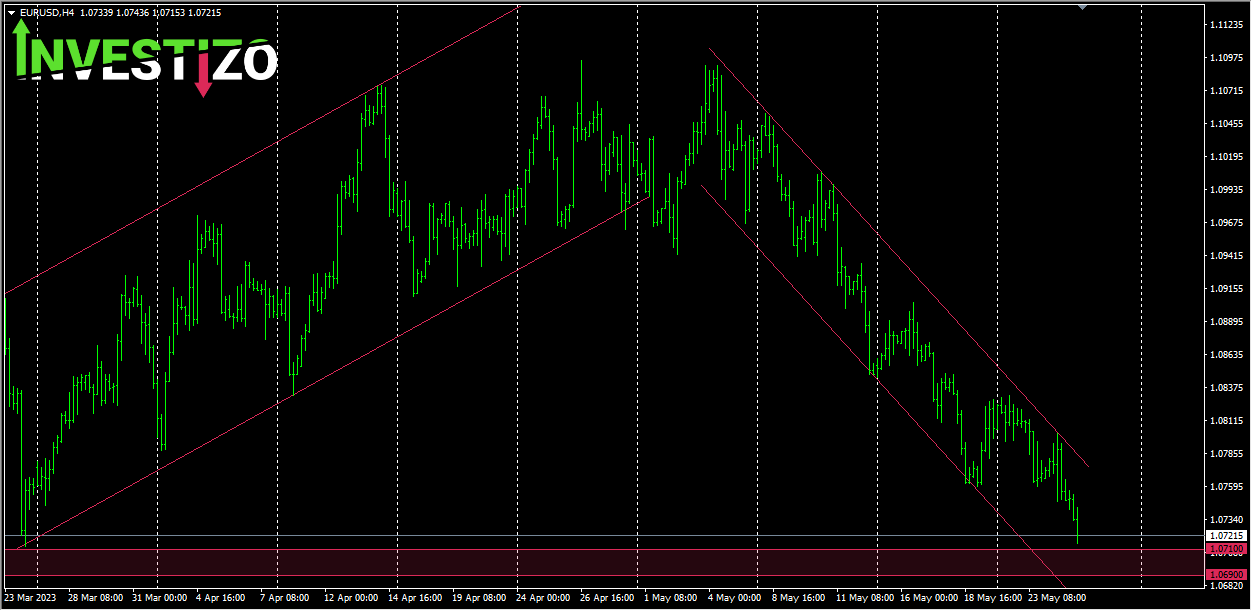
The EUR/USD currency pair reacted to this news by dropping to March lows. The price tested the level of 1.0715. The currency pair continues to move within a descending price channel. Within this movement, the next target for further decline could be the level of 1.0550. The price may find local support in the range of 1.0690-1.0710.