
Fundamental analysis of WTI
Oil prices fell sharply after the previous rise amid growing concerns about a possible decline in demand from the world's largest consumers - the US and China.
With WTI crude oil prices trading below their 100-day moving averages, market sentiment has shifted to bearish. While U.S. oil production is expected to grow slightly, demand is expected to decline and gasoline consumption is expected to hit a 20-year low in 2023. The slowdown in China's economy and consumer price index is dampening demand and raising concerns about the global economy as Chinese refiners cut orders from major exporters such as Saudi Arabia. These demand restraints have led to a cautious outlook for the crude oil market in the short term, but the price could fall to $75 a barrel, especially if supported by expectations that OPEC+ members such as Saudi Arabia and Russia will continue to cut production.
At the same time, the US reported a decline in the number of active drilling rigs, hinting at possible future production cuts - factors that, combined with OPEC+ strategic production, could put pressure on prices in the short term. Oil prices briefly recovered last Friday on the back of Iraq's support for OPEC+ production cuts.
In financial markets, the dollar's reaction to Fed Chairman Jerome Powell's hawkish stance on inflation was surprisingly subdued. Despite his statements on aggressive policy measures to push inflation towards the 2% target, the dollar remained weak despite a disappointing US consumer confidence index.
Overall, the oil market is following the developments, giving both bearish and bullish signals. Although near-term indicators are showing a bearish trend amid demand uncertainty and possible oversupply, changing economic conditions and geopolitical events continue to play a major role in oil price dynamics.
Technical analysis and scenarios:
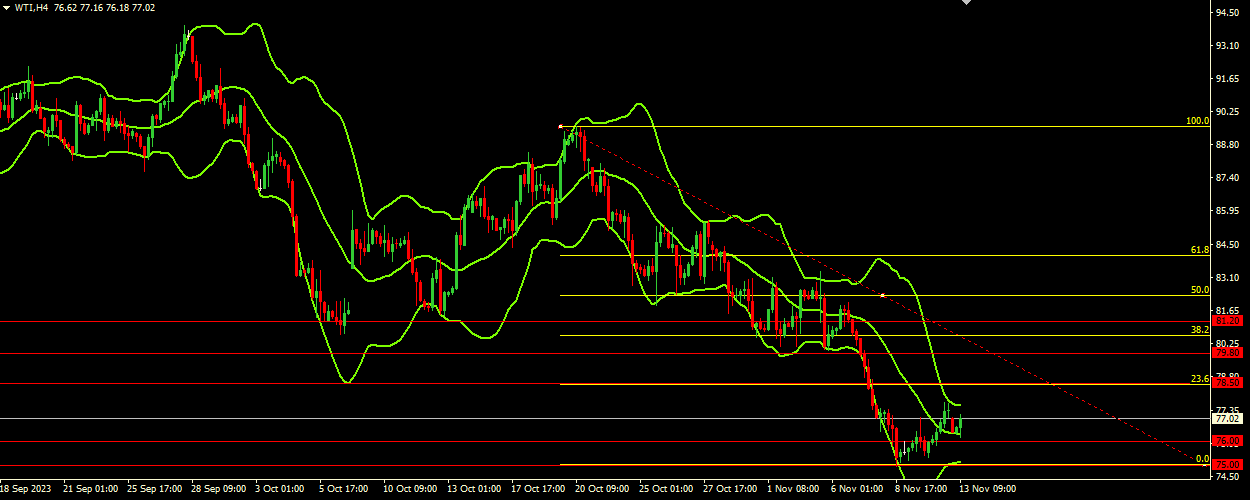
At the current price of 77.10, WTI crude oil is trading just below the upper Bollinger Bands at 77.60 and above the middle band at 76.30. The downward direction of the Bollinger Bands suggests that the market may be entering a consolidation phase and the price range is narrowing. The market may see WTI crude oil trading within the range of the Bollinger Bands in the coming days, with a possible narrowing of the bands indicating lower volatility. If the price stays within the upper band range, the probability of an upward move towards resistance levels will increase. However, a break below the middle Bollinger Band could mean a shift to bearish dynamics and possibly lead to a test of support levels.
Main scenario (BUY)
Recommended entry level: 78.50.
Take Profit: 79.80.
Stop Loss: 78.00.
Alternative scenario (SELL)
Recommended entry level: 76.00
Take Profit: 75.00.
Stop loss: 76.50.