
Fundamental analysis of WTI
Crude oil prices declined on Wednesday, mainly due to worrisome economic signals from China. The latest economic indicators, including retail sales and industrial production in July, indicate a likely slowdown in the country's economic growth. The indicators cast doubt on China's ability to meet its 5% growth target this year, prompting Beijing to cut interest rates twice since June. Their goal is clear: to stimulate economic activity, thereby boosting demand for oil.
The economic slowdown becomes even more apparent when you consider that data released last week showed deflation in China, characterized by year-on-year declines in consumer and producer prices. While China's economic trajectory looks uncertain, the situation in the US oil industry looks mixed. U.S. crude inventories, an indicator of fuel demand, fell by 6.2 million barrels last week, reaching lows not seen since April. Asian refiners are taking the opportunity to quickly purchase available US crude supplies. OPEC+ members, including Saudi Arabia and Russia, are central to this dynamic. Both countries have recently taken steps to limit oil supplies, which has indirectly led to higher oil prices. Saudi Arabia, the world's top oil exporter, has pledged to maintain a voluntary production cut of 1 million bpd through September, which began in July. There are signs that these cuts will intensify. At the same time, Russia has pledged to cut oil production by 500,000 bpd by the end of the year and plans to cut oil exports by 300,000 bpd next month. Financial institutions are adjusting their forecasts in light of these developments. For example, UBS revised its year-end Brent oil price forecast from $90 to $95 per barrel, citing increased supply cuts by Saudi Arabia and Russia.
Thus, while market sentiment is currently bearish due to the economic situation in China, potential bullish factors still remain. The future of oil prices depends on China's upcoming economic decisions, which are linked to the strategic decisions of major oil producing countries.
Technical analysis and scenarios:
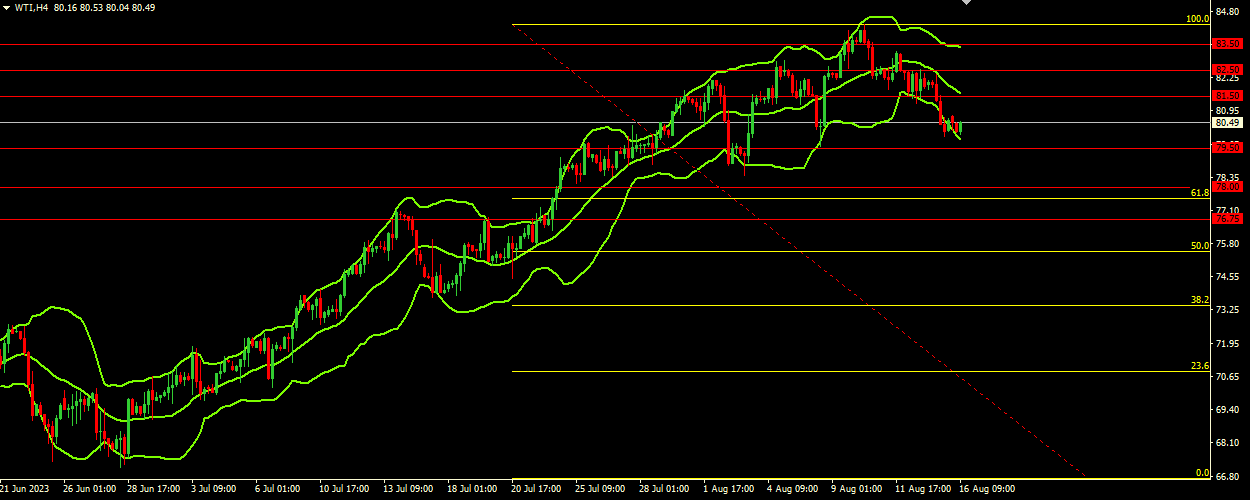
The Bollinger Bands indicator shows a widening price range, which indicates increased volatility. The price is currently trading near the lower band, indicating bearish sentiment but also pointing to potential undervaluation. As price is rising in the lower Bollinger Bands range, this could also indicate a reversal is imminent, but caution should be exercised.
Main scenario (BUY)
Recommended entry level: 81.50.
Take Profit: 82.50.
Stop loss: 81.00.
Alternative scenario (SELL)
Recommended entry level: 79.50.
Take Profit: 78.00.
Stop loss: 80.00.