
Fundamental analysis EURUSD for 23.06.2023
EUR/USD faced significant selling pressure and broke the key support level of 1.0900. A number of factors contributed to the decline, causing the euro to lose more than 1 cent since Thursday, when the euro hit a new monthly high above 1.1000.
One of the main reasons for the euro's fall was the sluggish manufacturing and service sector business activity indexes in France and Germany in June. This index was lower than expected, which caused concern. Concerns about recession in the euro area. On the other side of the currency pair, the U.S. dollar index (DXY) is climbing above 103.00. This is supported by the market's current risk aversion and the Federal Reserve's consistent "hawkish" stance, including statements from Fed Chairman Jerome Powell. In addition, comments from James Bullard of the St. Louis Fed, Rafael Bostic of the Atlanta Fed and Loretta Mester of the Cleveland Fed are also drawing attention from a hawkish perspective.
Market participants are closely watching the actions and statements of the Fed and the European Central Bank (ECB) on monetary policy normalization. The assessment comes amid growing fears of a slowdown in Europe and the US. We also continue to pay attention to preliminary PMIs from France, Germany and the Eurozone, which should affect our expectations for the third quarter. A wave of bearish data from France and Germany is expected, leading to a decline in the Eurozone Manufacturing PMI to 44.5 from 44.8 and the Services PMI forecast. Down from 55.1 to 54.5.
As the ECB prepares for a possible rate hike in July, investors should keep an eye on new orders and inflation data. Low inflation in output prices should dampen expectations for a rate hike after the summer. However, a significant slowdown in the manufacturing sector combined with slowing activity in the services sector could fuel recession fears. The ECB's view on tightening and the possibility of this story continuing into September is now less clear due to lower economic activity. These developments should raise concerns about growth prospects, especially as further credit tightening is expected. At the same time, the sharp decline in the euro makes sellers keep an eye on the 200-hour moving average, a break of which would signal a move to a more bearish outlook in the near term. This would allow sellers to continue the downward momentum. Alternatively, if the German PMI disappoints, the target could be the 100-day moving average of 1.0808. In conclusion, investors and traders should keep a close eye on economic indicators, central bank commentary and short-term market movements. Because these things will be key in shaping the stock market's trajectory. market. market. Euro/U.S. Dollar. These include reports from ECB directors Fabio Panetta and Luis de Guindos, as well as bond and equity earnings reports over the weekend.
Technical analysis and scenarios:
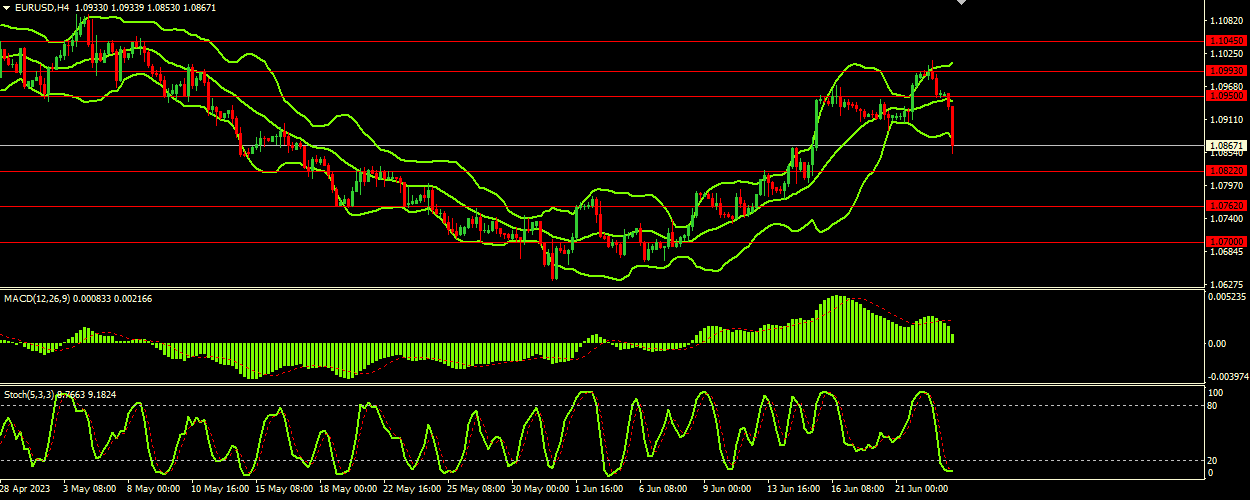
The stochastic oscillator is at a low of 9.1552, indicating that the pair is oversold, which is usually a bearish signal. The MACD line is below the signal line, indicating a potential downward momentum. The price is also declining below the Bollinger Bands, which may indicate a continuation of the downtrend.
If the ECB signals that it intends to tighten monetary policy, or if there are positive economic changes in the Eurozone, this could lead to a short-term bullish reversal.
Recommended entry level (BUY): 1.09420.
Take Profit: 1.10450.
Stop loss: 1.0900.
Recommended entry level (SELL): 1.09000.
Take Profit: 1.08220.
Stop loss: 1.09500.