
Brent Crude Morning Brief: August 5, 2026
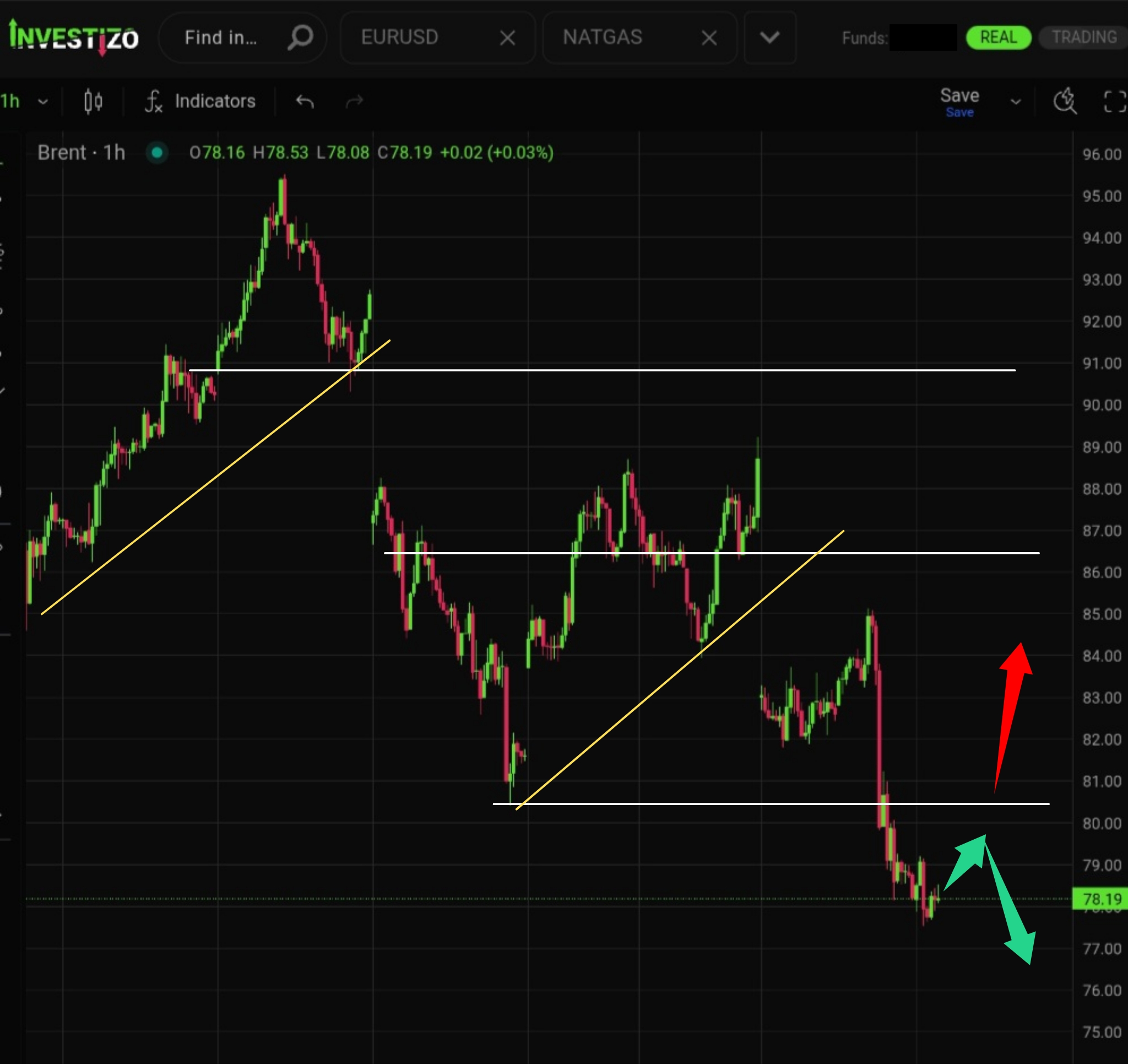
Brent Crude trades at $78.19 per barrel, extending its sharp sell-off as spot prices break decisively below the $80.00 psychological handle. The rapid acceleration to the downside has erased recent geopolitical risk premiums, taking the benchmark to intraday lows near $77.50, where initial buyers have attempted to establish a temporary foothold. The sudden breakdown has swiftly converted prior support near $81.50 into a formidable overhead supply zone, while immediate intraday resistance now caps initial rebound attempts around $79.80.
The aggressive price drop was triggered by reports from Axios indicating that the United States, Iran, and Oman are finalizing a 60-day temporary agreement regarding maritime navigation through the Strait of Hormuz. US President Donald Trump confirmed in a Fox News interview that significant progress has been made in negotiations and projected a swift reopening of the waterway. Iran’s Foreign Ministry acknowledged positive technical and political discussions with Oman aimed at establishing transit mechanisms, under which vessels would enter the Persian Gulf via Iranian territorial waters and exit through Omani waters without transit fees. Additional diplomatic momentum built on reports that Tehran is considering allowing European nations to assist in clearing sea mines during an initial 30-day corridor cleanup, even as Al Arabiya refuted separate speculation of direct Saudi-Houthi ceasefire talks.
Despite the diplomatic breakthroughs that weigh on futures pricing, physical market fundamentals present a nuanced backdrop. Data from the American Petroleum Institute showed US crude inventories unexpectedly built by 2.69 million barrels, defying market expectations for a 2.0 million barrel draw. Counterbalancing the short-term inventory build, Saudi Aramco reaffirmed strong underlying physical demand, projecting global oil demand growth of 2.0 million barrels per day in the second half of 2026 to reach 107.1 million barrels per day. The state oil producer emphasized that maritime traffic through Hormuz remains well below pre-conflict levels and will require months to fully normalize. In contrast, an estimated 2.1 million barrels per day of additional global demand will be required in the coming months solely for strategic inventory replenishment.
Market Overview: With headline risk leaning heavily toward diplomatic de-escalation, the intraday path of least resistance remains tilted to the downside, moderated by lingering physical shipping delays and robust medium-term demand. For upcoming trading sessions, expected price action favors consolidation within a $77.50 to $80.50 corridor as market participants await official confirmation of the trilateral agreement. Primary resistance sits at $79.80 and $80.50, where any short-covering rallies are likely to attract institutional sell orders from funds unwinding risk premiums. On the downside, a firm intraday breach below support at $77.50 would open the door for a liquidity sweep toward structural demand at $76.00, whereas failure to break lower keeps Brent Crude bound to range-bound trading around the $78.00 pivot.