
Brent Crude Morning Brief — July 17, 2026
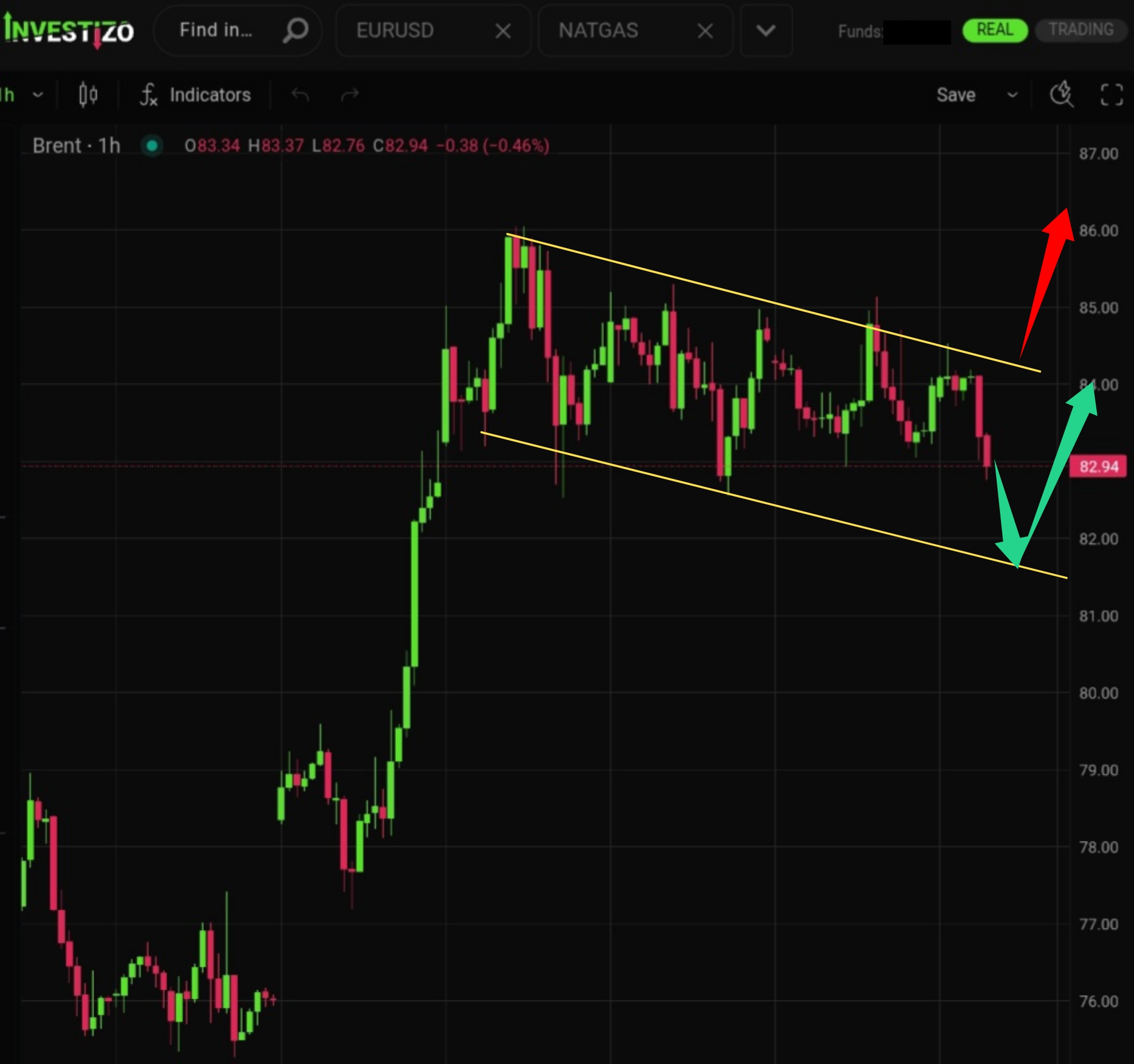
Brent Crude trades at $82.95 this Friday morning, consolidating for a fourth consecutive session within the $83.00 to $85.00 corridor. Despite the minor intraday pullback, this consolidation holds Brent at its highest valuation since the collapse of the previous bilateral truce, securing an impressive 11% gain over the course of the week. The immediate price action reflects a market tightly wound by supply-side anxiety, with investors weighing a severe maritime chokehold against localized risk-off positioning. While the White House publicly characterizes global energy markets as "stable," the persistent upward march in prices is compounding domestic political pressure on President Trump. The International Energy Agency (IEA) has amplified these concerns, warning that the global economy faces severe, structural difficulties if the current disruptions to critical shipping lanes persist for several more weeks.
The primary catalyst remains the escalating military confrontation between the United States and Iran, which has paralyzed the Strait of Hormuz. Commercial transit through the trade artery has ground to a near-halt, with safe passage currently restricted almost exclusively to vessels directly linked to Iran. Highlighting the severity of the bottleneck, the seven-day moving average of crude oil shipments through the strait plummeted to just 5.5 million barrels per day (bpd), down from 9.4 million bpd in the preceding week. The Iranian military and the Islamic Revolutionary Guard Corps (IRGC) have reaffirmed their blockading stance, asserting that the strait will remain closed until Washington formally recognizes Iran's legitimate state authority, declaring that regional energy exports will either be "available to all or available to none."
Tensions have further intensified with threats of a wider regional conflict. Tehran is now threatening to blockade the Bab-el-Mandeb Strait, a move that would completely sever key maritime routes between Europe and Asia. In a direct escalatory warning, the IRGC has explicitly designated President Trump's commercial real estate holdings in the Persian Gulf as legitimate military targets, specifically naming the Trump International Hotel & Tower in Dubai, Trump Plaza in Jeddah, and Trump Tower in Riyadh. Despite these systemic threats, President Trump addressed the nation, asserting that the US would soon extract economic benefits from the Iranian confrontation, drawing parallels to the ongoing US exploitation of seized Venezuelan crude supply. However, the physical vulnerability of regional production was laid bare yesterday when a drone struck an oil tanker at Iraq's southern Basra terminal (which handles roughly 90% of Iraq’s oil exports) forcing a temporary but highly disruptive suspension of loading operations.
Market Overview: The immediate path of least resistance remains tilted to the upside given the unprecedented physical constraints at both Hormuz and Basra. Continuation buyers are focused on establishing a clean daily close above near-term technical resistance at 85.00, which would expose the major overhead chart gap at 87.00 and clear the way for a run toward the 90.00 psychological milestone. On the downside, the current consolidation floor at 82.50 offers immediate tactical support, with a deeper structural defense anchored at 81.10 where heavy physical buying blocks reside.