
Fundamental analysis of WTI
US WTI crude oil is showing notable momentum, trading around 81.30 USD, recovering from a one-week low/ The interaction of geopolitical decisions, economic indicators and market sentiment has shaped the current picture for WTI.
The main driver of the WTI uptrend, which marked a six-week streak of gains, was the decision by Saudi Arabia and Russia, the world's two largest oil producers, to continue cutting oil production until September. Specifically, Saudi Arabia will voluntarily cut production by 1 million barrels per day. At the same time, Russia has pledged to reduce oil exports by 300 thousand barrels per day. The cuts, announced ahead of a key OPEC+ meeting, sparked fears of a possible supply shortage, driving up oil prices.
Nationally, data from the U.S. Energy Information Administration showed a record 17 million barrel decline in crude oil inventories. The decline was driven by rising oil prices and strong crude oil exports. In support of this trend, the American Petroleum Institute reported that U.S. crude oil inventories fell by 15.4 million barrels in the week of the last week of July, which continues to support WTI crude oil prices.
However, a number of economic factors and monetary policy considerations could dampen this upward momentum. Recent US data suggests the likelihood of a recession amid a tightening labor market, slowing service sector growth and a strengthening dollar. Initial jobless claims rose to 227,000 and the ISM services PMI for July fell to 52.7, pointing to a potential slowdown in oil demand. Observers are keeping a close eye on wage inflation and US employment data, including the much-anticipated non-farm payrolls report, which is expected to show 180,000 new jobs in July. This data may affect the Fed's monetary policy, which will affect borrowing costs and, consequently, oil demand.
In Europe, the recent increase in interest rates by the Bank of England to a 15-year high, as well as a more pronounced slowdown in the growth of eurozone companies could dampen demand. However, a positive note came from China, the world's second largest oil consumer, where the services PMI rose to 54.1 in July. WTI oil prices may also be supported by the willingness of the Chinese authorities to provide additional funding to boost confidence in the private sector.
Despite potential economic factors, WTI fundamentals look generally favorable in the near term. The combination of voluntary production cuts by major oil companies, a record decline in oil inventories and encouraging economic data from China support optimism. However, caution should be exercised as volatile economic conditions, changes in monetary policy and the outcome of important data such as US non-farm payrolls could alter this outlook. Market participants need to remain vigilant and keep a close eye on these changing factors to identify trading opportunities for the WTI crude oil price.
Technical Analysis and Scenarios:
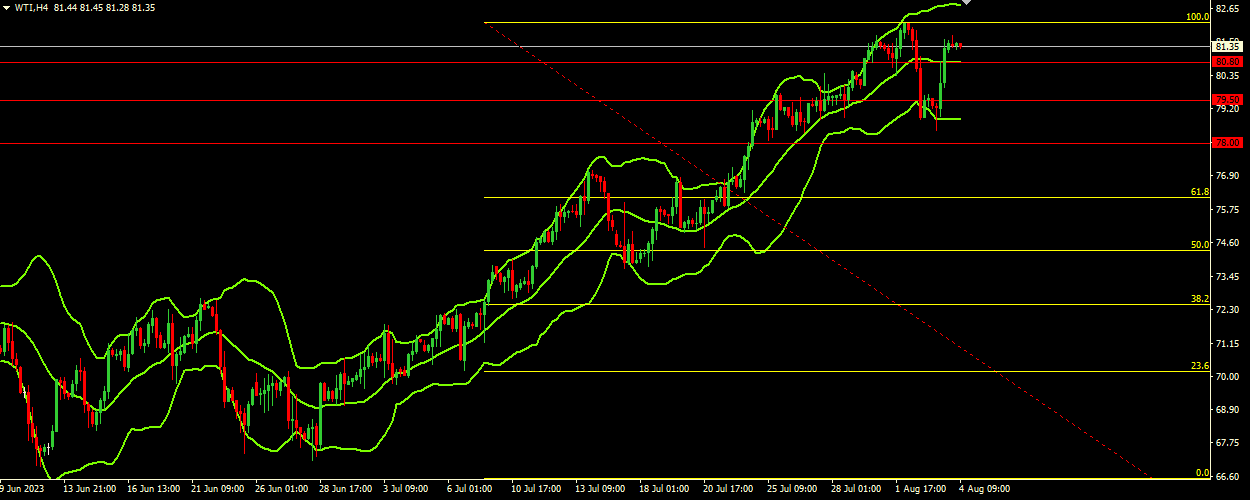
The technical structure of WTI crude oil indicates a flat trading pattern with horizontal direction of the Bollinger Bands. Price proximity to the upper band may indicate bullish momentum, but traders should remain cautious and keep an eye on key levels. The main scenario suggests potential buying and selling opportunities based on a breakdown of the Bollinger Bands as well as the corresponding support and resistance levels. Alternative scenarios further emphasize the importance of these key levels and provide additional entry and exit points.
Main scenario (BUY)
Recommended entry level: 82.50.
Take Profit: 85.00.
Stop Loss: 80.50.
Alternative scenario (SELL)
Recommended entry level: 80.80.
Take Profit: 79.50.
Stop loss: 81.50.