
Disappointing statistics from China significantly affected the dynamics of the currency market
Introduction:
The global currency market experienced significant movements on Wednesday as various factors, including the surprise deterioration in Chinese factory activity and political developments, influenced the performance of major currencies.
Australian Dollar Volatility:
The Australian dollar witnessed a rollercoaster ride following the release of local inflation data and disappointing Chinese purchasing manager surveys. Initially, the Aussie rallied by 0.33% due to increasing odds of further central bank tightening. However, concerns about a potential China slowdown quickly reversed the gains, resulting in a decline of 0.38%. Subsequently, the Australian dollar fell even further by 0.46%, reaching its lowest level since November 10th at $0.6486. Analysts emphasized the Australian dollar's connection to commodity prices and how the lack of positive economic news from China exacerbated concerns, overshadowing domestic data that indicated tighter monetary policy.
AUDUSD technical analysis:
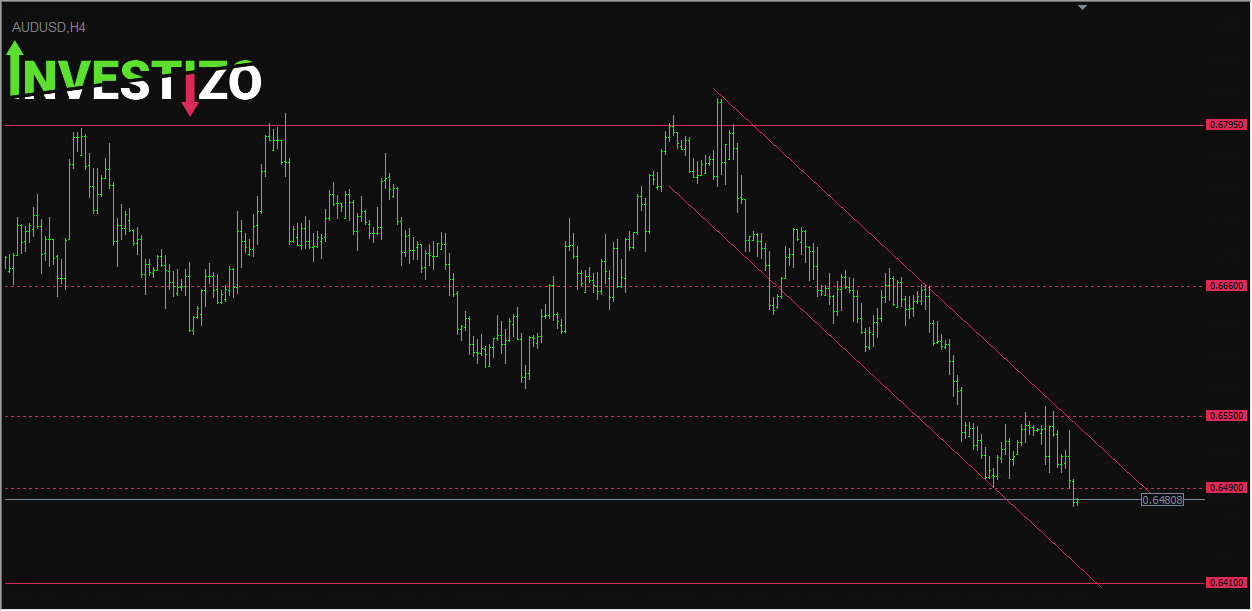
On the chart AUDUSD currency pair continues to move within the descending channel. The price updated the local minimum at 0.6490, which opens the way for the bears to the long-term target at 0.6410. Buyers will be able to break the situation only by returning the price behind the level of 0.6490. In this case a reversal signal may be formed - a false-break and the priority will shift to the side of purchases.
New Zealand Dollar Slides:
Similar to the Australian dollar, the New Zealand dollar faced downward pressure and sank by as much as 0.78%, reaching a 6-1/2-month low at $0.5996. The negative sentiment surrounding Chinese factory activity contributed to the decline of the Kiwi dollar, as New Zealand's economy has significant trade ties with China.
Chinese Yuan Weakens:
In offshore trading, the Chinese yuan experienced a slump, falling as much as 0.43% to 7.0218 per dollar. The deterioration in Chinese factory activity raised concerns about the country's post-pandemic recovery. A weak Chinese economy tends to have positive implications for the U.S. dollar and the yen, particularly against the euro and the Australian dollar, as these currencies are negatively affected by a slowdown in China.
Safe-Haven Currencies Outperform:
Traditional safe-haven currencies, such as the U.S. dollar and the Japanese yen, outperformed the euro and sterling. The U.S. dollar index, which measures the greenback against six major peers, rose by 0.28% to 104.34. Meanwhile, the euro declined by 0.41% to $1.06910. The yen received additional support after Japan's top currency diplomat expressed concerns about the currency's recent slide and emphasized officials' vigilance. This raised speculations about potential intervention to stabilize the yen.
Turkish Lira Hits Record Low:
In other currency developments, the Turkish lira reached a record low of 20.67 per dollar following President Tayyip Erdogan's victory in an election runoff, extending his rule into a third decade. The lira's decline reflects concerns about the country's political stability and economic outlook.
Conclusion:
The global currency market experienced notable movements driven by the surprise deterioration in Chinese factory activity and political events. The Australian and New Zealand dollars declined due to worries about China's recovery, while safe-haven currencies like the U.S. dollar and the Japanese yen outperformed. Additionally, the Turkish lira hit a record low amid concerns about political developments in Turkey. Market participants will continue to closely monitor economic indicators and political announcements for further insights into the currency market's future direction.
Later today, Q1 Canadian GDP data will be released as well as the German Consumer Price Index for May.